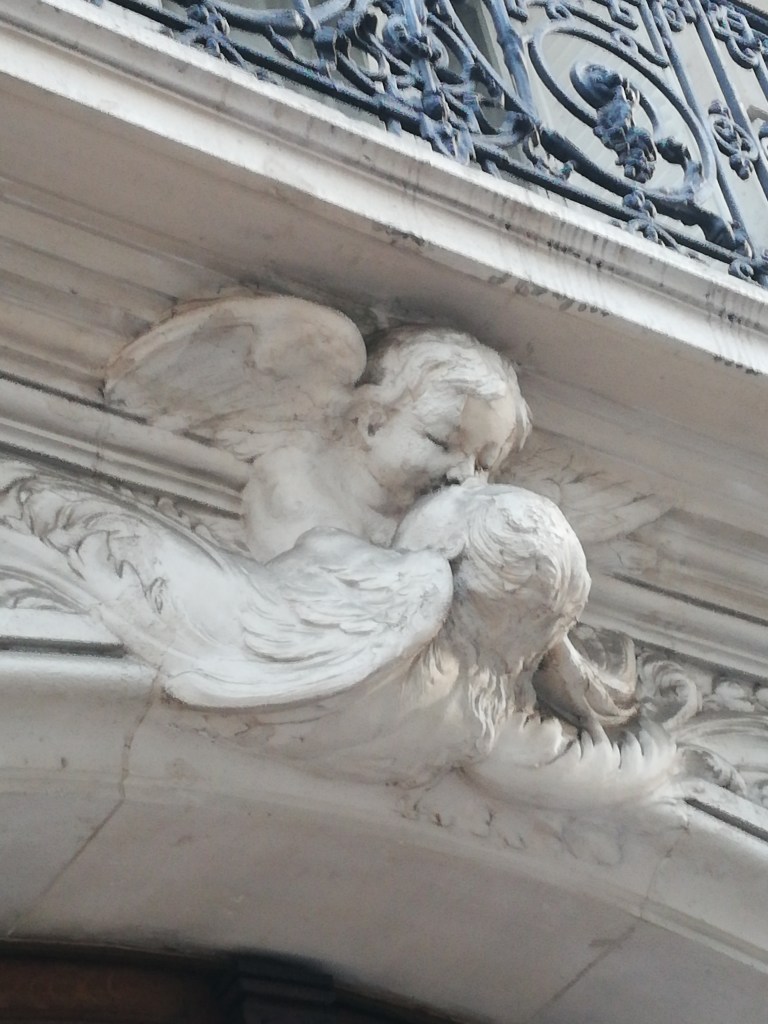
1 rue Mizon
On the key above the door, two cherubs embrace. The two heads project one above the other.
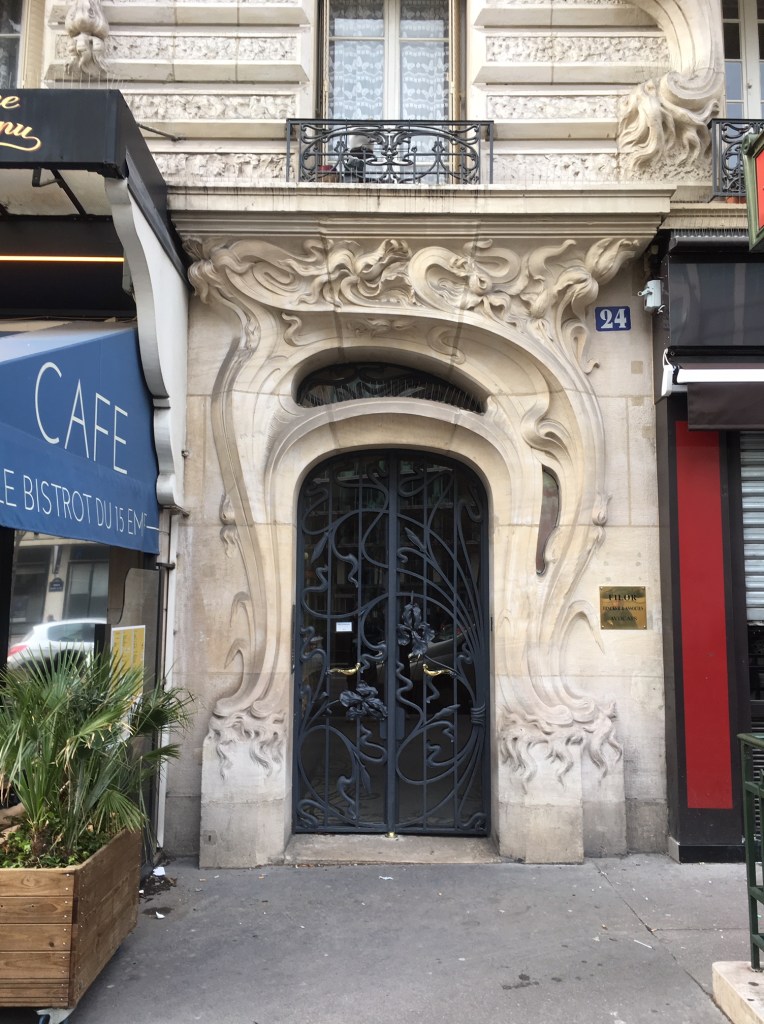
24 place Etienne Pernet
Exuberant, asymmetrical door surrounds reflect the spectacular facade of this Art Nouveau building, especially the top-floor windows.

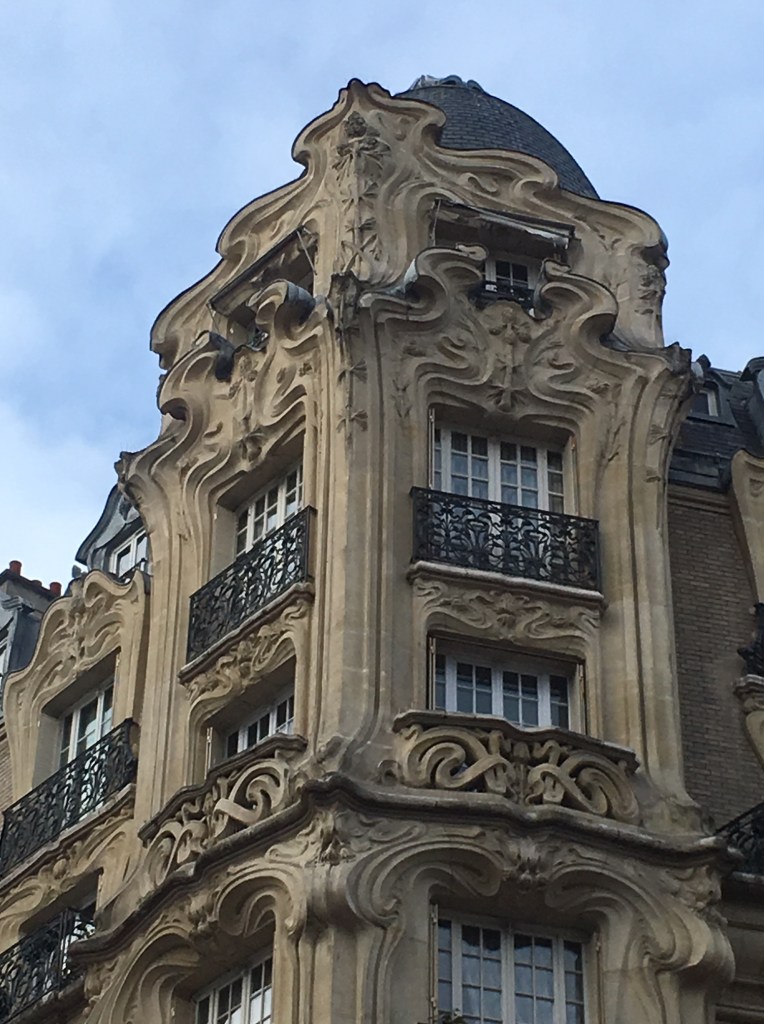

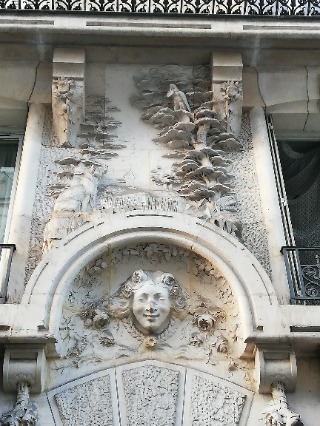
40 avenue Félix Faure
Smiling female mascaron with garlands of flowers and, above, a sculpture depicting La Fontaine’s fable, Le corbeau et le renard.
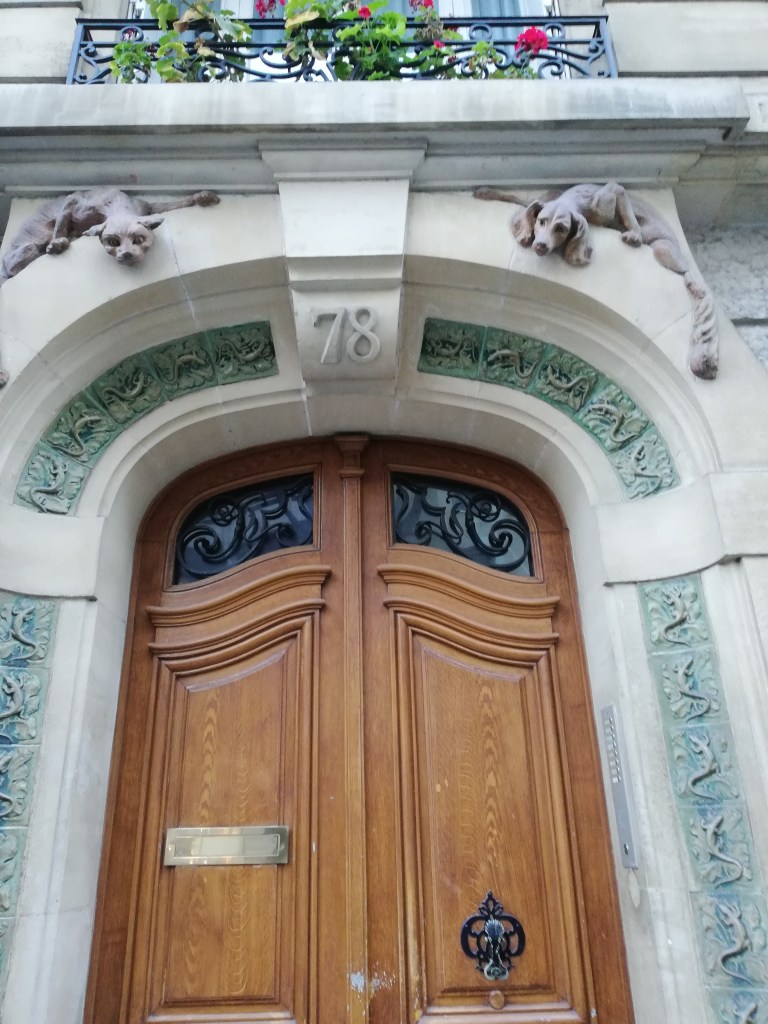
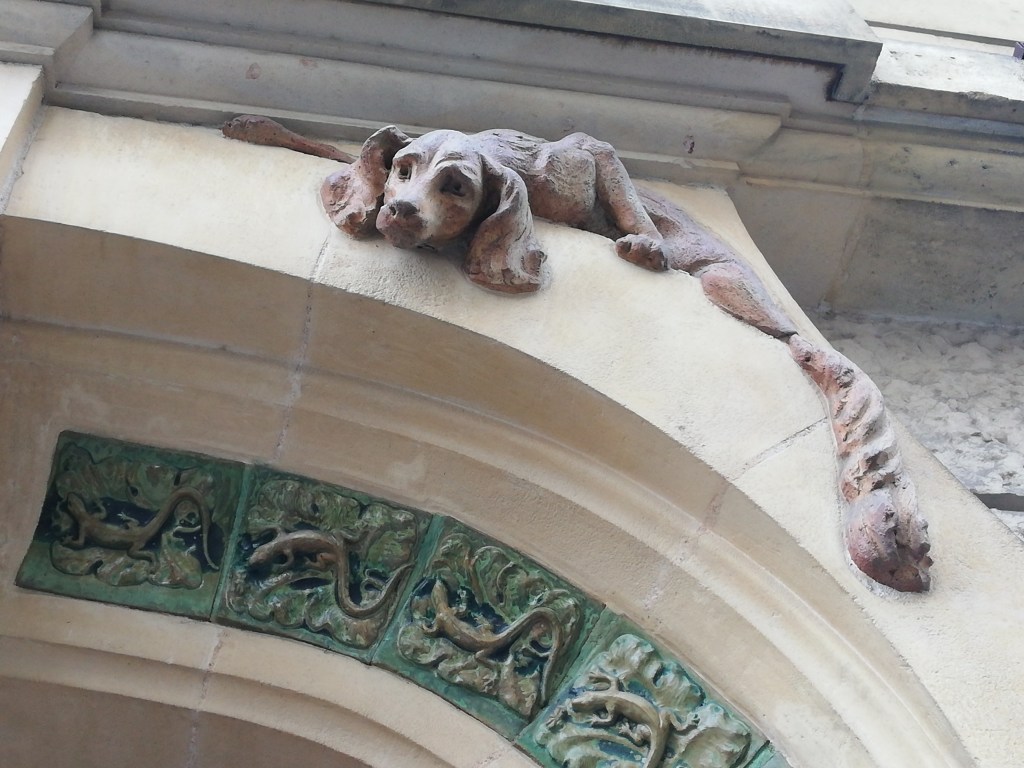
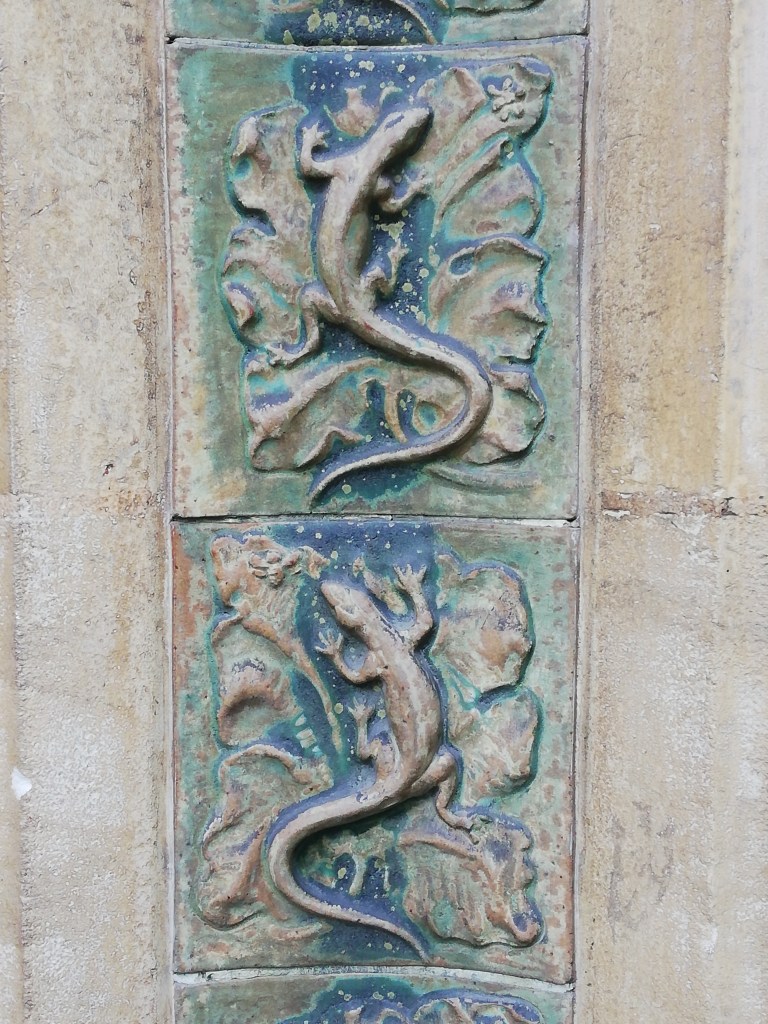
78 rue Mademoiselle
Two dogs watch passers-by from above the doorframe. The frame is adorned with ceramic plates featuring lizards. The ceramics are by Alexandre Bigot.
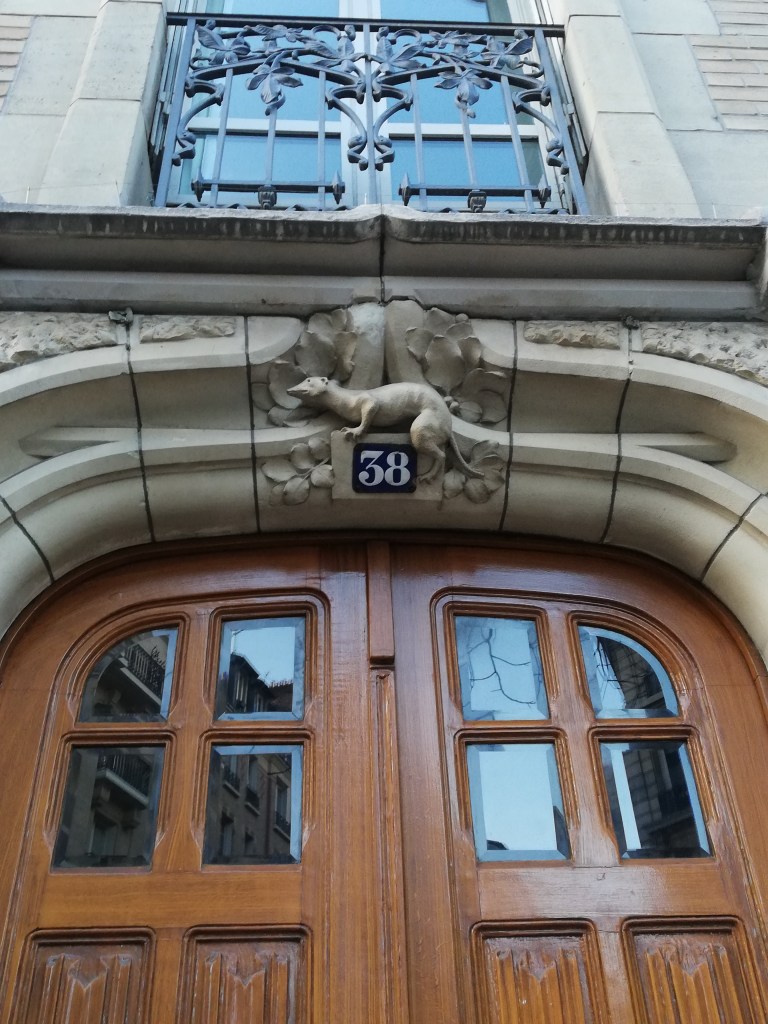
38 avenue Félix Faure
A weasel has taken up residence on the building number.

10 rue Valentin Hauy
Bust of a woman with very wavy hair extended by a garland of roses running along the doorframe. Beautiful noodle-style door hardware. The woman’s hair echoes the style of the door. Architect Paul Denis. 1904

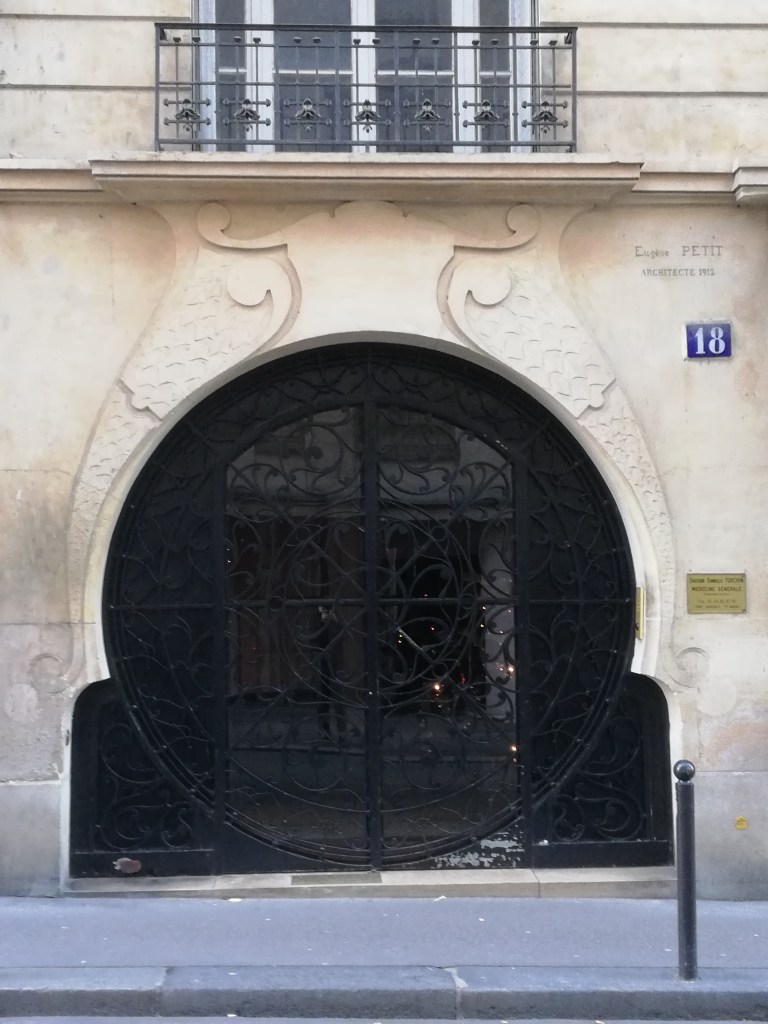
18 rue du Général Beuret
Completely round wrought-iron door surrounded by a fine scrolled frame. Architect Eugêne Petit. 1912
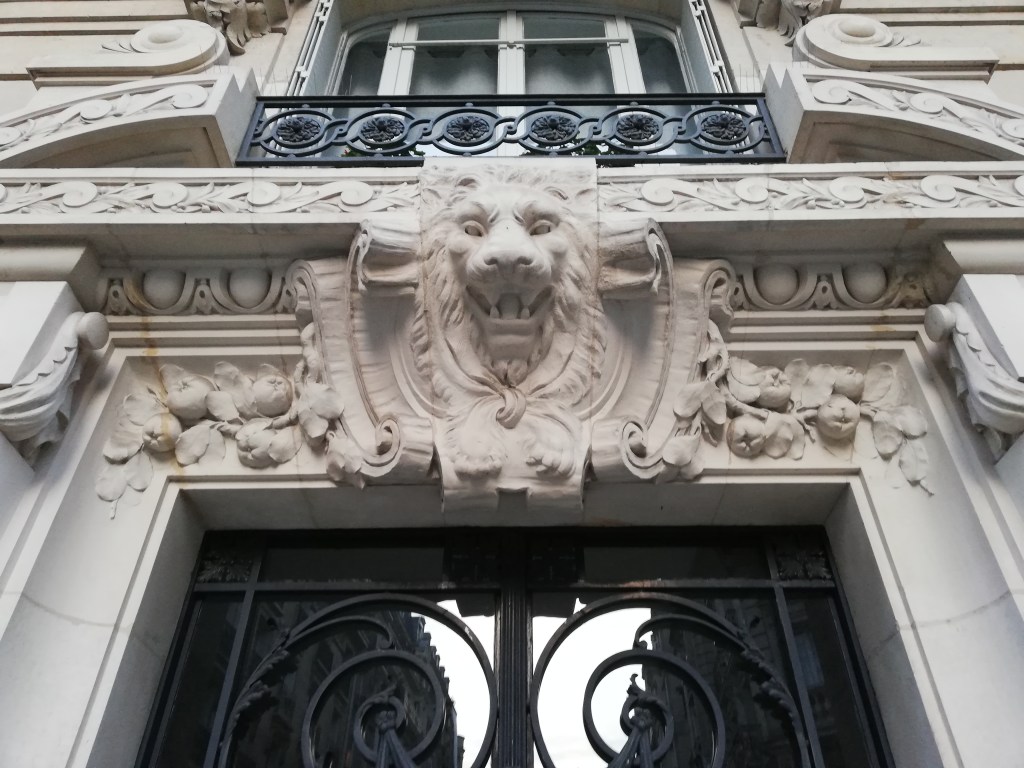
9 rue Brown Sequard
Lion’s head, open mouth, very aggressive. Apple tree branches decorate the frame.
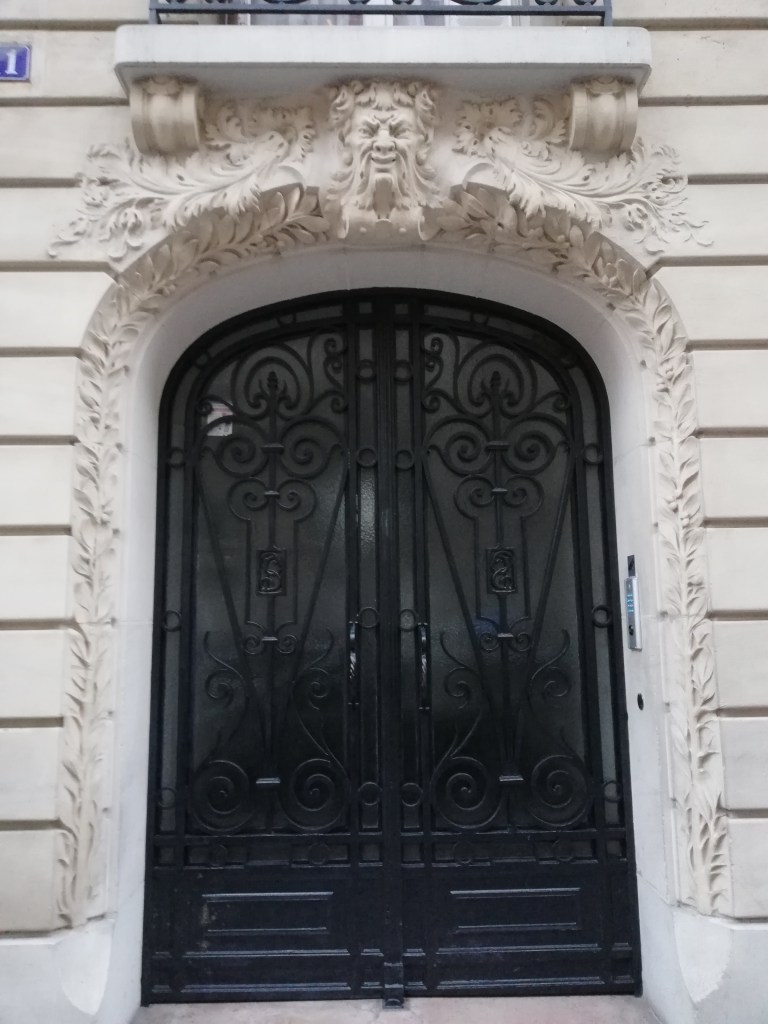
11 rue Brown Sequard
Faun’s head above the door. Olive branches run the length of the door frame.
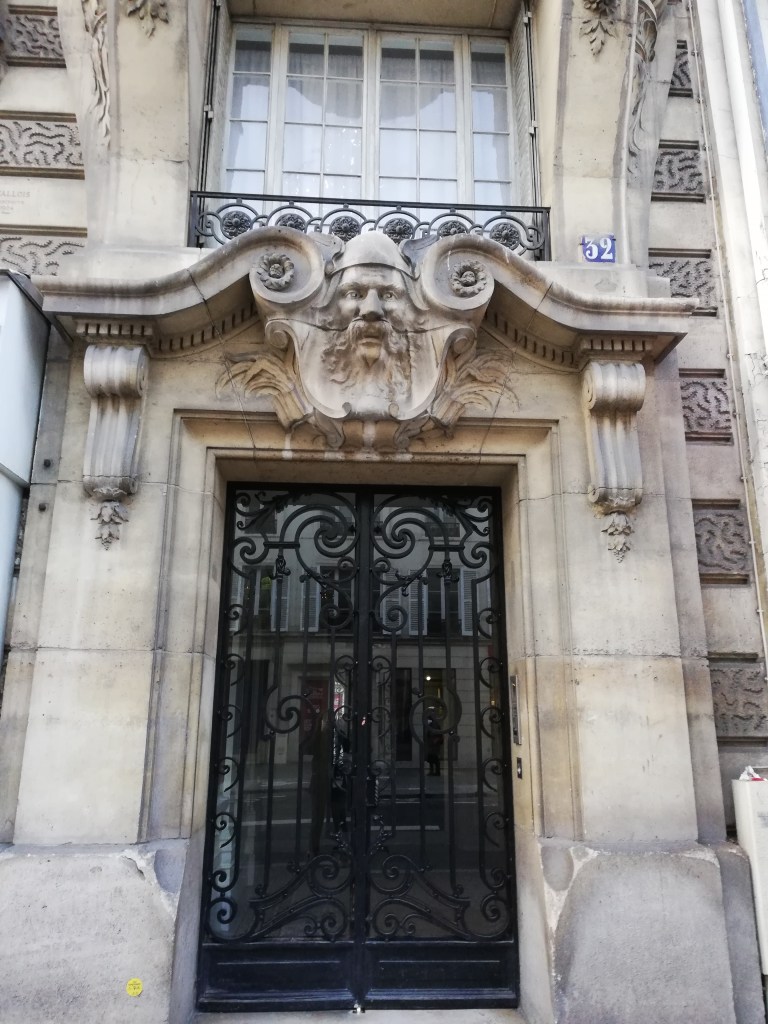
32 rue Lecourbe
Obelix’s ancestor?
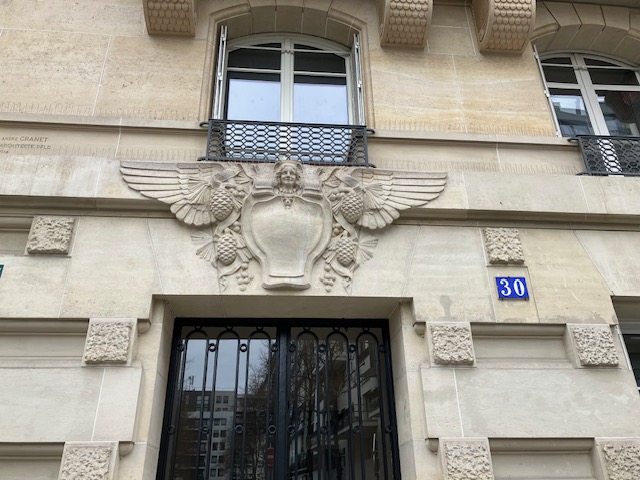
30 rue Desaix
Art nouveau building. A highly original composition above the door, tending towards Art Deco: a female figure surrounded by two loaves of bread and two large wings treated like an aviator’s badge. The allusion to aviation is explained by the architect’s passion for aeronautics: André Granet was behind the 1st aeronautics show in 1908, the forerunner of the Salon du Bourget. 1914
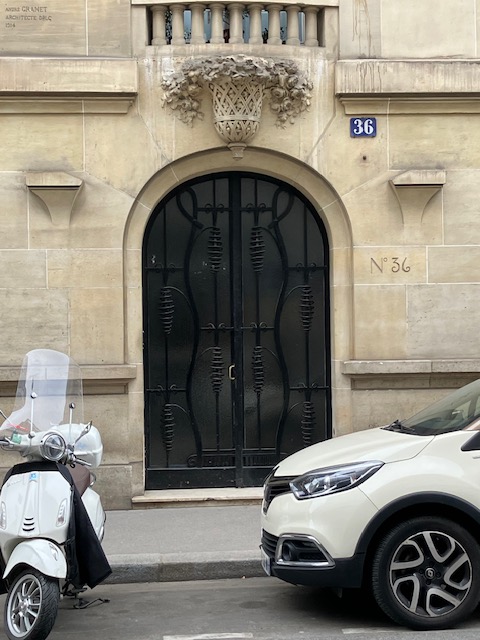
36 rue Desaix
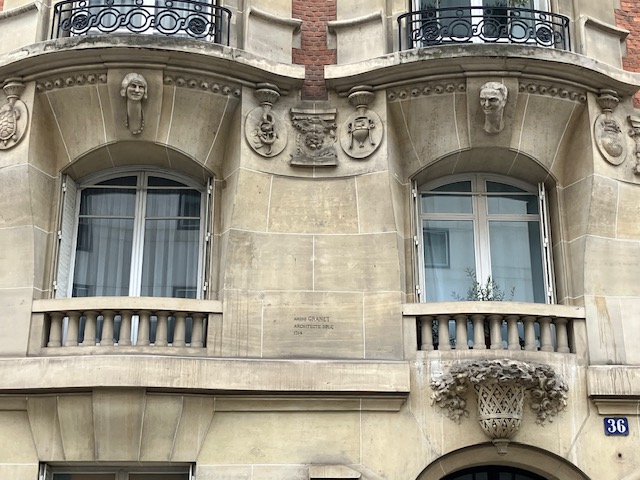
Woven vase above the wrought-iron door with curious spiral grape motifs. Above the 1st-floor windows, two busts with elongated necks hugging the curves above the windows. The busts appear to be portraits of Paul Watel, who commissioned the building, and his wife. To the left of the woman is a turtle, posed as a heraldic symbol. To the right of the man, a purse bears the inscription Viator ad aerarium. Viator means traveler or official messenger or apparitor, and aerarium refers to the public treasury. Rather than a literal translation, we prefer to think of this inscription as a « private joke » referring to architect André Granet’s passion for aeronautics, which led to the first Salon de la locomotion aérienne in 1908, the forerunner of the Salon du Bourget! Building constructed in 1914.
Other doors of interest:
| 12 rue Blomet | A door and a small window on the left, each framed by ogival palm leaves with a small cat with a large moustache on either side. |
| 126 avenue Emile Zola | Mascaron of man with slanting eyes and beard |
| 128 rue Lecourbe | Shell seen from the back. Chestnut leaves. Ironwork. Architect Léon Chesney |
| 14 place Adolphe Cherioux | Slightly leaning bust of a woman set in the door frame, in the form of scrolls terminating on either side of the door with two flowering vines. Door hardware: arabesques and exuberant plant motifs. Architect Henri Ragache. 1902 |
| 170 rue de la Convention | A small cat surrounded by laurel holds the building number in a clip above the door. Imposing wrought-iron door. |
| 20 rue Lacretelle | Very nice, finely carved bas-relief depicting birds above a canted door. The door features very fine wrought ironwork with an original mix of rectilinear and curved motifs. Note the Art Deco plaque bearing the number of the building and the very neat font of the architect’s name next to the left-hand balcony on the 1st floor. Architect E. Lathuillière. 1929 |
| 23 square Vergennes | Narrow rounded door and garage door next door. Mosaic decor |
| 32bis rue Pérignon | Art Deco style. Stylized stork at the top of the door. |
| 4 rue d’Arsonval | Mosaic decoration on the façade |
| 4 villa de la Croix Nivert | Very simple ironwork door. Rounded door frame decorated with a simple geometric motif encompassing the door and an imposing shell above the door. |
| 40 rue de Crondstadt | Wrought-iron door with half-vegetal (foliage, flower baskets), half-geometric, basket-handle decoration, set in a rounded, carved porch with two allegorical figures in the center, one holding a feather, and behind them an elderly couple: a 3-quarter moustachioed man and a woman in profile. On the left are a compass, square and meter, on the right a saw and hammer against a cloudy background, and a frieze of vines frames the door. Sculptor Pascal Soullard. 1923 |
| 43 rue de l’Abbé Groult | Massive rounded columns topped by a tympanum of flowers. Architects Guillot et Fils |
| 50 rue Falguière | Lintel adorned with a bas-relief depicting a woman leaning back, her hand outstretched towards birds |
| 65 boulevard de Garibaldi | Architects J. Bouchard. Sculpteur Pascal Soulard |
| 66 rue Falguière | Important yellow and blue mosaic décor with vertical lines around the door and a basket of flowers and foliage on the door frame. Architect Ernest Billecocq. 1913 |
| 7 rue Gerbert | Female mascaron |
| 73 rue Olivier de Serres | Very geometric glass and metal door adorned with a woman’s profile in a medallion |
| 75 avenue Emile Zola | Architect Jules Longuet |
| 77 rue de la Convention | chestnut leaves |
| 7 rue Labrouste | A cheerful woman, drunk perhaps, in the middle of the vineyard, surrounded by two fauns: a young man on the left presenting her with a basket of grapes, an older man on the right bringing a bunch of grapes close to her ear. A swallow nibbles a grape on the right. Architect M. Morize. Sculptor R. Delandre |
| 8 rue Auguste Bartholdi | Vine above the door and vine shoots protruding from the facade with a very realistic effect. Quite strange! 1904 |
| 8-10 place du Commerce | Beautiful, solid stone frame. Ironwork. Architect Clément Feugueur |
| 92 avenue de Suffren | Two fruit baskets frame the door. Ironwork. Architects J. Boucher and P. Delaplanche |
| 112 bis avenue de Suffren | A very smiling, mischievous female face, eyes turned to the right, surrounded by pine cones that fall like large earrings. |
| 10 rue Rosa Bonheur | A fox’s head and a panther’s head (?) emerge from the foliage decorating the doorframe. Note the Art Nouveau ironwork on the balconies. Architects Noel Martin et Cousin. Sculptor Paul Le Bègue1903 |
 Une journée à Paris