
14 rue Jean de La Fontaine
Castel Béranger: Hector Guimard’s masterpiece. The free-form wrought-iron door reveals the glazed stoneware panels lining the entrance walls. Ceramics by Alexandre Bigot. 1895-1898
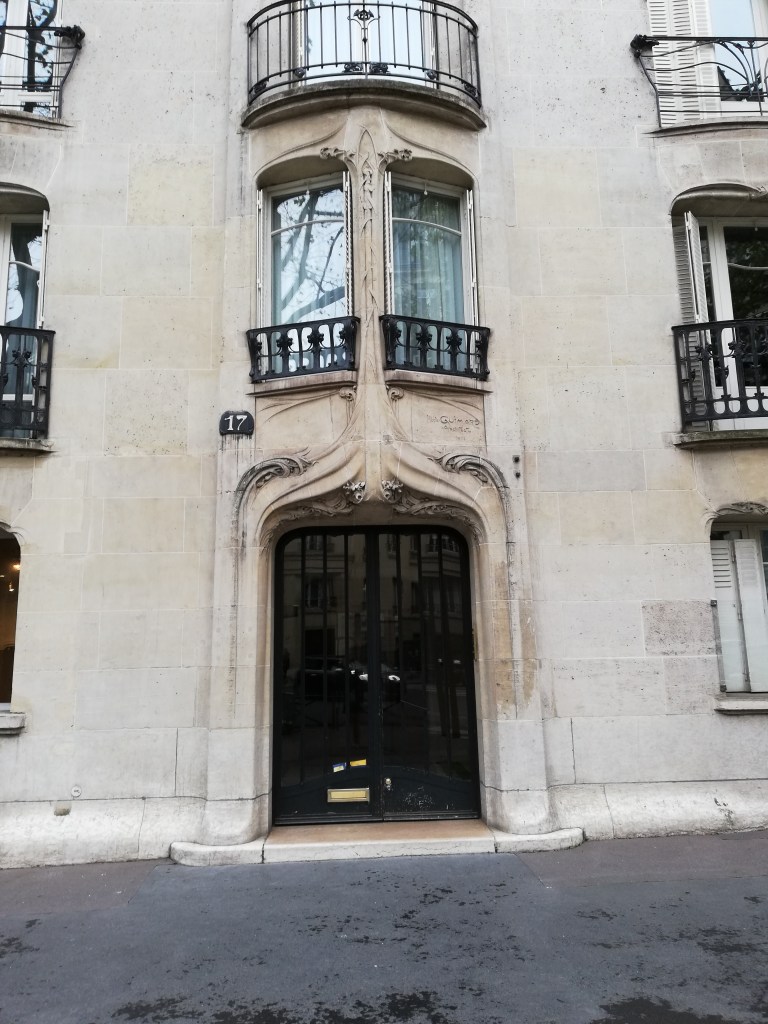
17 rue Jean de La Fontaine
Building designed by Hertor Guimard. Of particular note: the attractive café, with its décor listed as a Historic Monument.
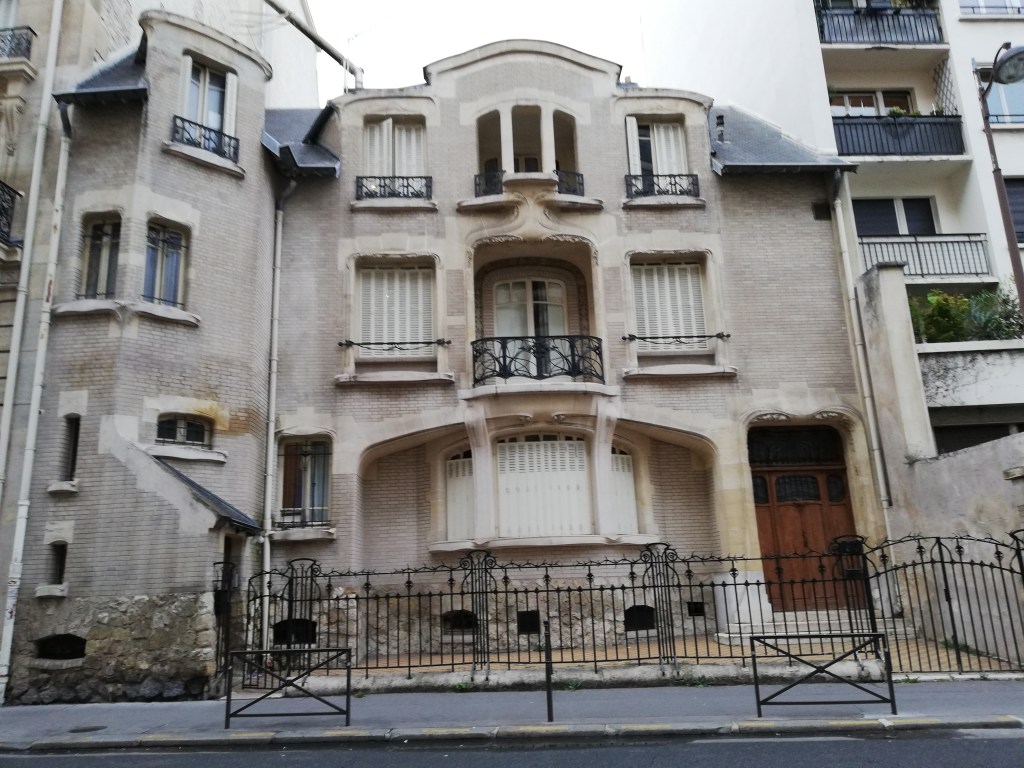
66 rue Jean de La Fontaine
Hôtel Mezzara built by Hector Guimard in 1910-1911 for industrialist Paul Mezzara.

21 quai Louis Blériot
Private mansion of the painter Alexandre Nozal. « The artist wanted the building to face west, so as to « freely enjoy the ever-renewed spectacle of the sunset », and to be as close as possible to the Seine, so as to benefit from the view downstream and along its banks, as well as over the hillsides of Meudon and Sèvres (which was undoubtedly true at the time!) » says the Cercle Guimard website. Architect Charles Blanche, sculptor Louis Léothaud. 1911
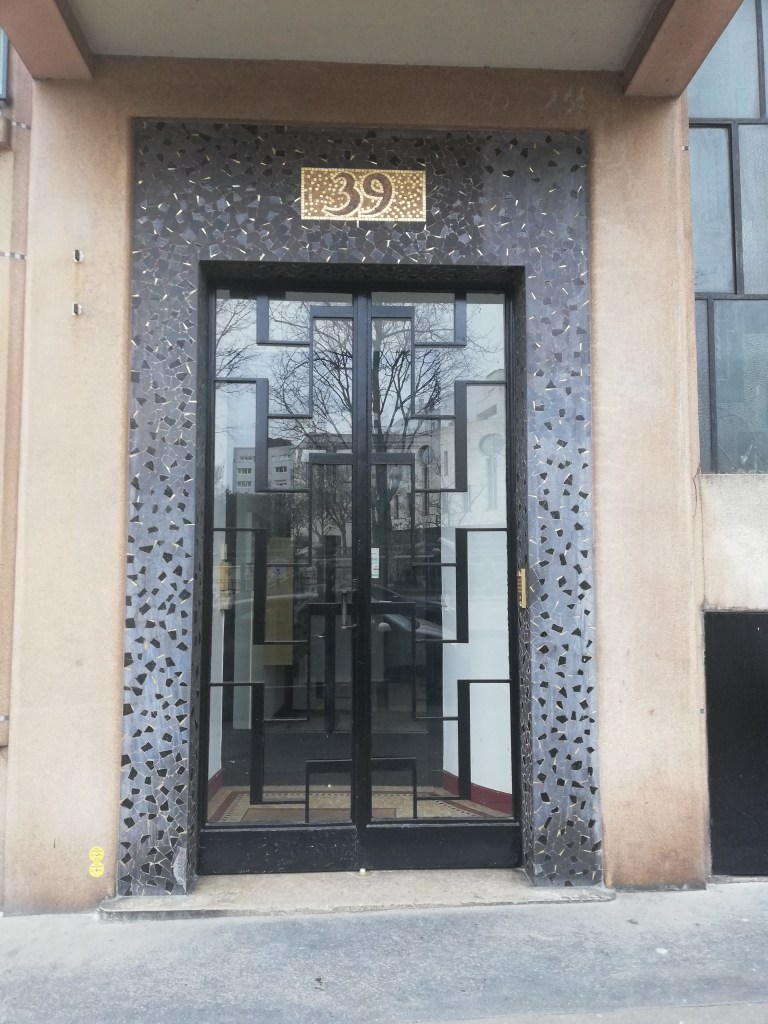
39 rue Gros
Modern style. The building number on a gold mosaic rectangle stands out against the black mosaic door frame.

41 rue Gros
Rounded, canted door set in a straight rectangular frame.

43 rue Gros
Building designed by Hector Guimard, located at the corner of rue Agar. A bas-relief on the rue Agar façade pays tribute to the tragic actress.
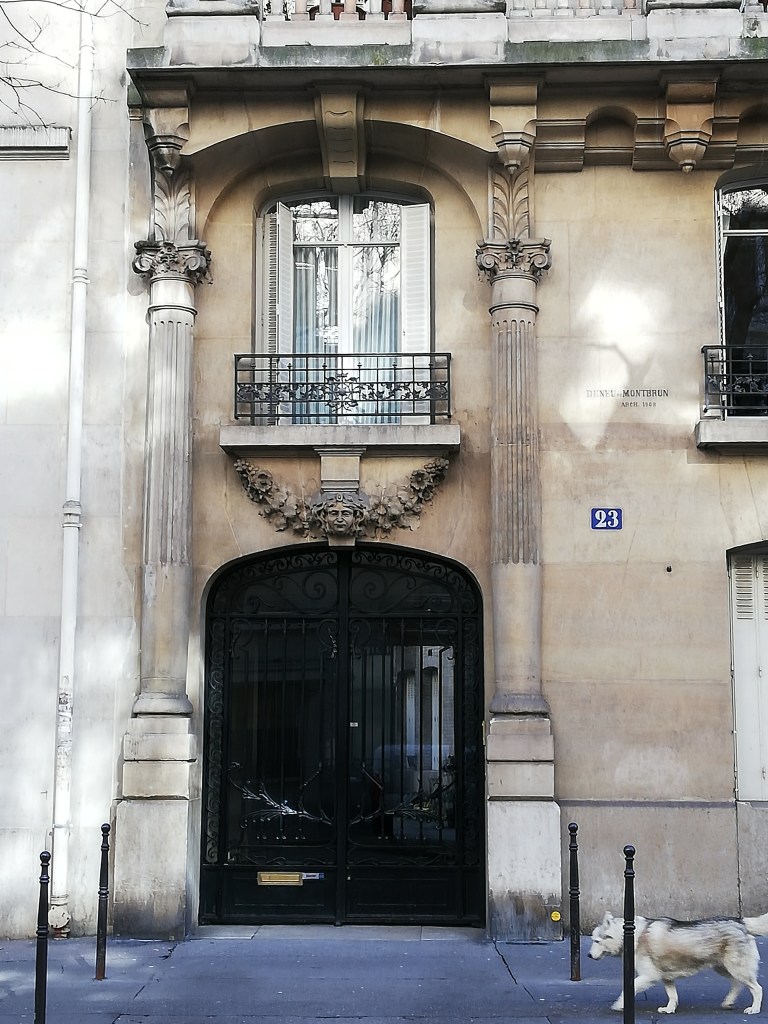
23 avenue Théophile Gautier
Door and window framed by two fluted neo-classical columns. Key above the door adorned with a mascaron and framed by a garland of flowers leading up to the balcony. Architect Deneu de Montbrun. 1908

24 avenue Théophile Gautier
Art Deco building. Door surmounted by a huge crown of roses and papal coins.
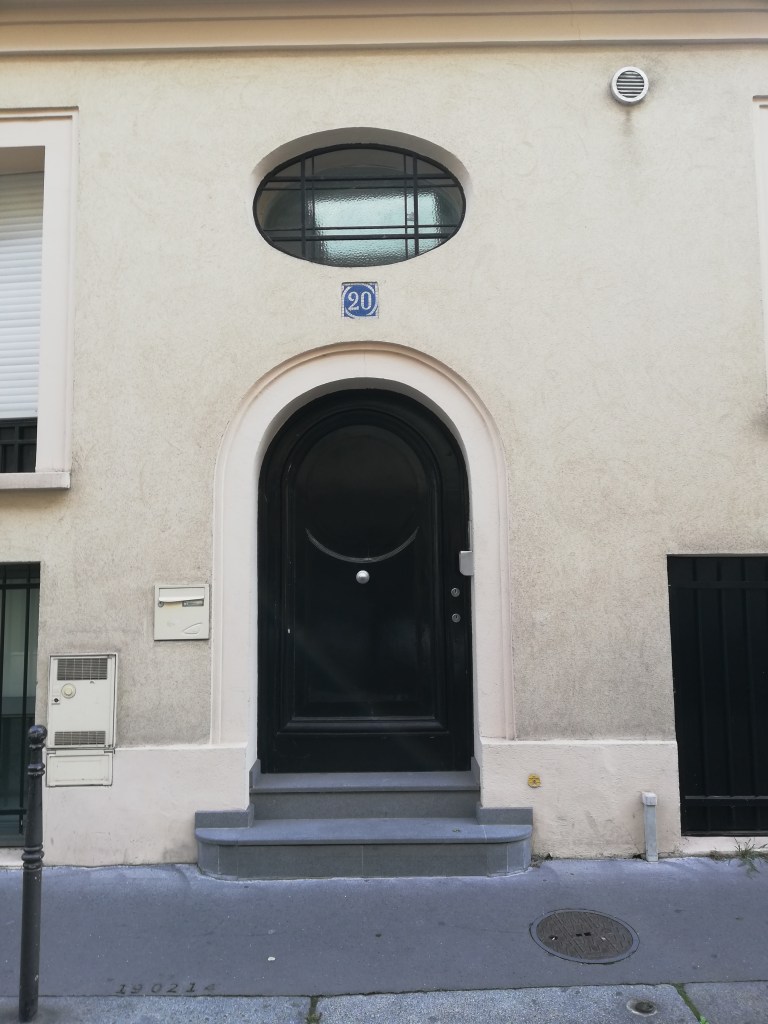
20 rue des Marronniers
Art Deco door and « bull’s eye » oculus.
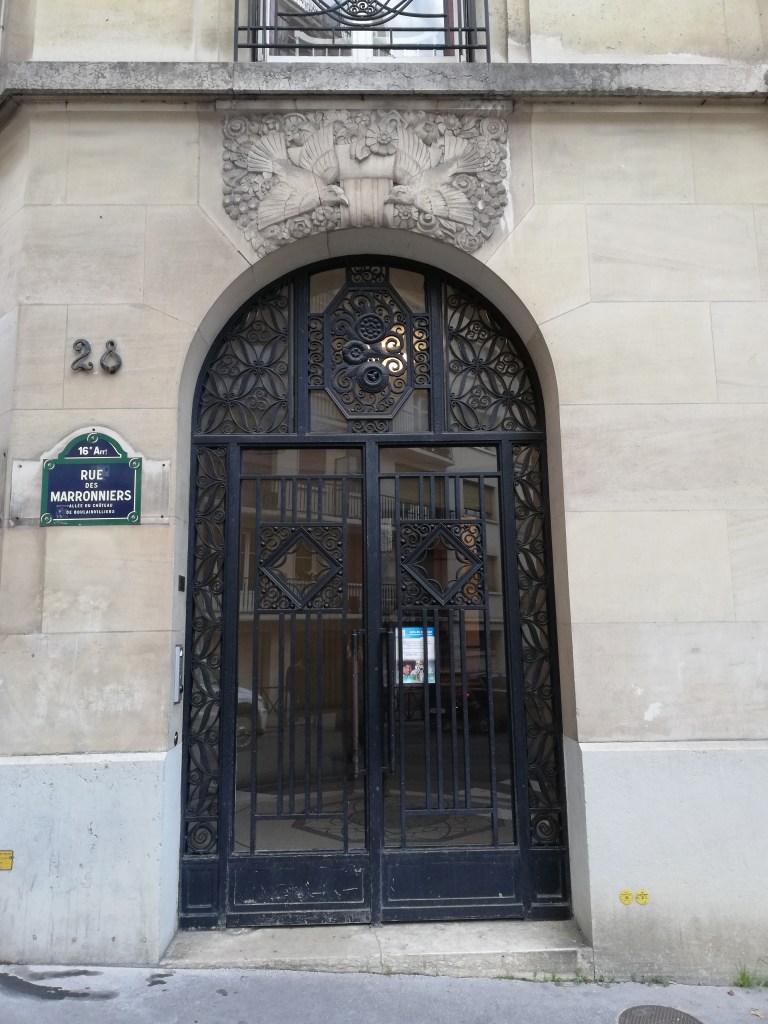
28 rue des Marronniers
Art Deco style. Two birds clash, wings outstretched.
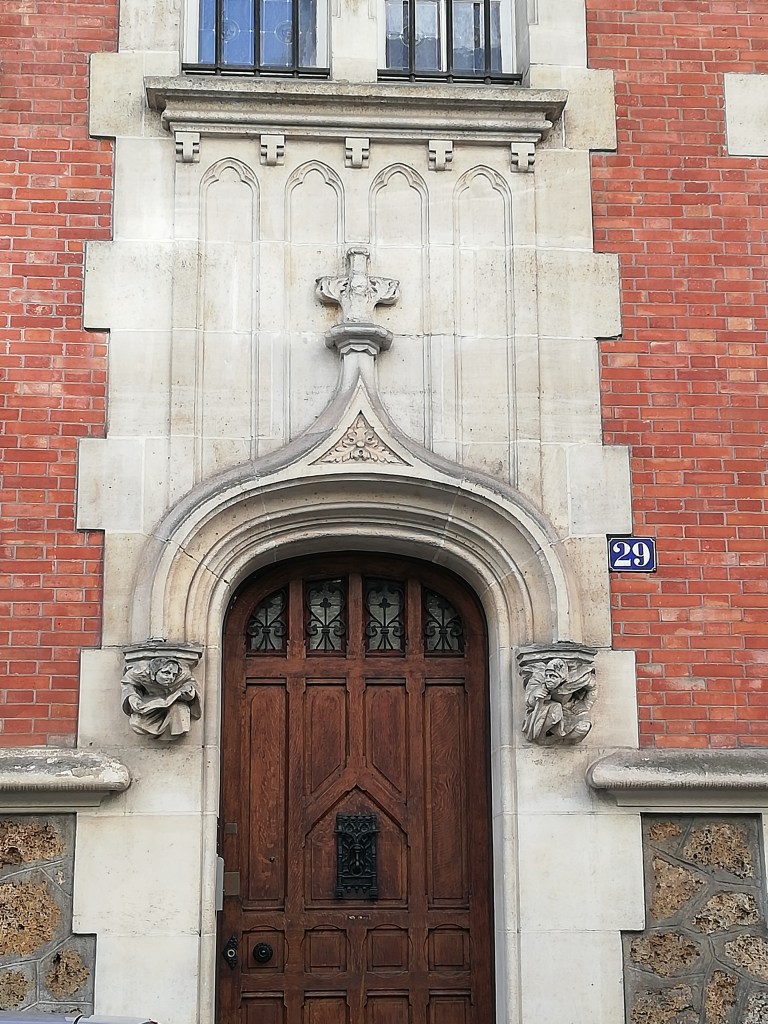
29 rue des Marronniers
Small neo-Gothic mansion door, with two small console figures supporting the gable. On the left, a monk holding a book on his knees; on the right, a seated soldier leaning on his sword.
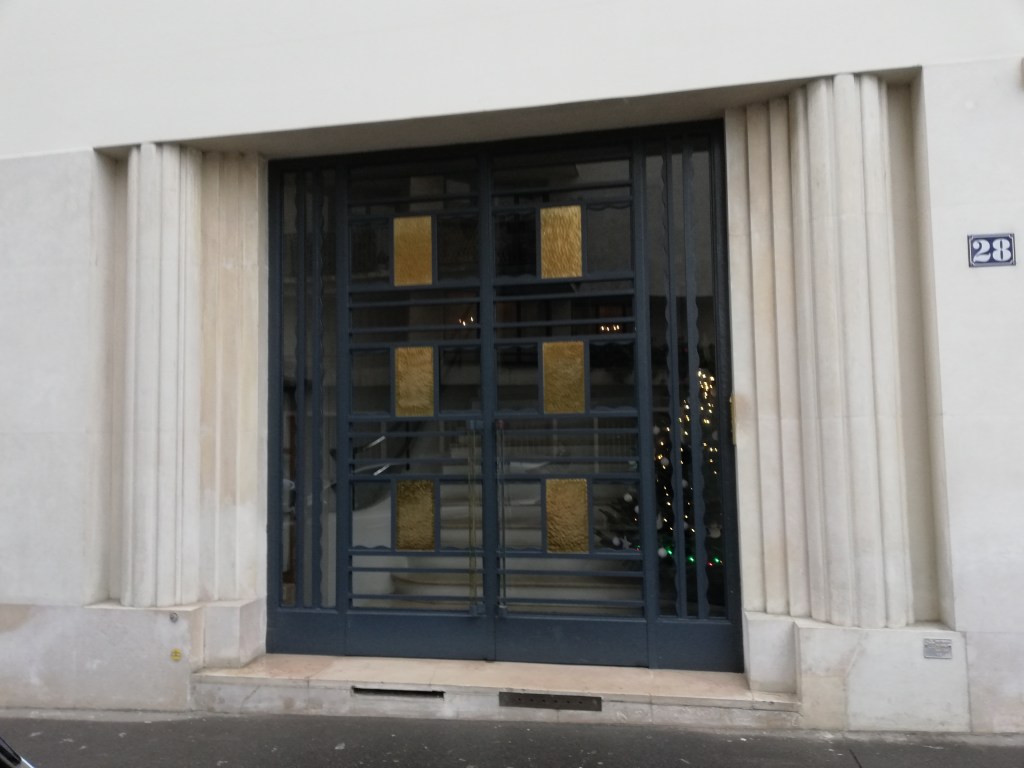
28 rue du Ranelagh
Art Deco. Very geometric ironwork door, decorated with hammered copper rectangles and framed by two fluted columns.

51 rue Raynouard
Door surmounted by a sculpted group by André Abbal. Building designed by Auguste Perret in the 1930s. The architect had his office on the first floor and his apartment on the top floor.
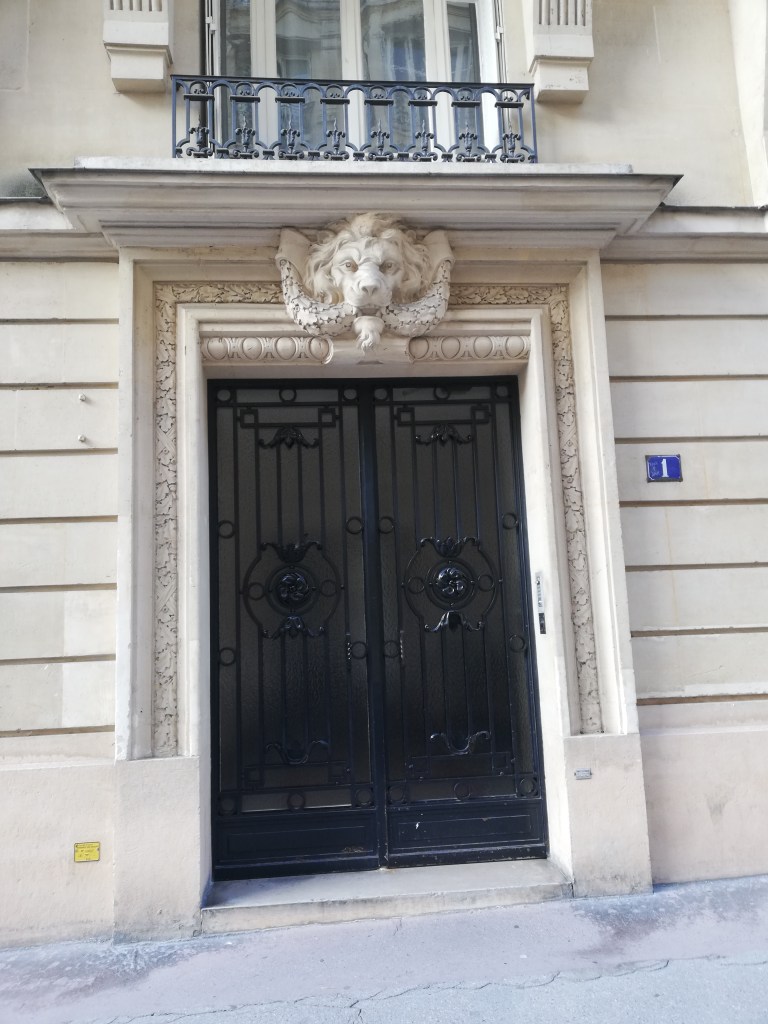
1 rue Liautey
Door surmounted by a very prominent, fierce lion’s head.

2 rue Liautey
Cartouche adorned with a delicate carving of an angel builder holding a plumb line. Buildings can be seen in the background.

Other doors of interest:
| 4 rue Benjamin Godard | Rounded door with small rounded window on the side. Twin sisters 99 rue de la Pompe, 7 bis rue Damrémont 18è |
| 5 rue Chernovicz | Ram’s head between twin carriage doors and artichoke leaves |
| 12 rue de l’Assomption | Two cherubs nonchalantly leaning against a shell above the door. Architect Gustave Poirier |
| 18 rue Ribéra | Fluting and leaf motifs inscribed in a diamond shape on either side of the door. Two masks with slanted eyes topped with fruit decorate the bacon brackets above the door. Architect Henri Dubouillon |
| 45 rue Ribéra | Above the door, a pastiche of the Horses of the Sun bas-relief that adorns the Hôtel de Rohan. Architect Jean-Marie Bouchard. 1894 |
| 76 avenue de Versailles | Art deco. Two squirrels face each other |
 Une journée à Paris